
II: Putting in the Work
If you have not read my previous post on this topic, start here first.
In this post, I will discuss how I put the concepts I learned from Sethi’s book, I Will Teach You to Be Rich, into practice.
In the previous post, I mentioned my main takeaways from his book.
- Credit cards aren’t bad if you know how to use them
- Maintain a monthly zero-balance on your credit cards
- Budgeting and money management doesn’t have to be stressful or unpleasant
- Investing isn’t just for rich people
- Start contributing to a 401k or an equivalent
Of these five things, I’m going to focus on two
- Optimizing credit cards
- Learning to budget
Optimizing My Credit Card
At the time, I had one credit card that I opened when I was a freshman in college. For the most part, I used my card responsibly. I never missed a payment or went over my credit limit, but I did have a balance that I carried each month.
After reading Sethi’s book, I Will Teach You To Be Rich, I realized that carrying a monthly balance was detrimental because it meant that I was constantly overspending if I couldn’t pay the entire balance during the monthly billing cycle AND because of interest, I was being charged more for the items than I had paid for them. Once I learned that I decided to pay off my balance over the next three months.
I wouldn’t make any additional purchases on my credit card until I reached a zero balance. Instead, I would use my debit card for all purchases.
Next, I took Sethi’s advice, and I upgraded my card to one that offered cashback. My credit card company (and many others like it) offers a 3-tier reward system. 1% cashback on all purchases, 2% on groceries, and 3% on gas purchases.
Instead of making these everyday purchases with my debit card, I began making them with my cash rewards card. Reoccurring bills like my cellphone and cable bill were paid with my credit card. Then each month, I paid my balance off completely so that I was not being charged interest on those purchases.
This is where budgeting can be challenging. It really takes discipline to stay within a budget and ensure that you do not overspend. This was not a skill I learned immediately. It took me a while to discipline myself, and I did mess up occasionally. Because at the end of the day, we can all justify any purchase that we want to make.
The last credit card advice I took from Sethi was to ask for a credit line increase. Increasing your credit line helps with your credit utilization. Your credit utilization is basically how much of your credit card limit you use compared to how much you have available. For more information on that, you can visit this “Credit Utilization Rate” or this site “Understanding Credit Utilization”.
I was skeptical about calling my credit card company to ask for an increase. For whatever reason, I just didn’t think it would be that simple. But it actually was. At that point, I had been a long-time customer. Remember, I got the card at 18, and I never had any major issues. So, after going through a series of questions, the representative decided that I was in good standing and approved my request for an increase which ended up doubling my available credit.
Though this step isn’t necessary, it can give your credit score a small boost in the long run.
Learning to Budget
Budgeting is something I have always (somewhat) done though I didn’t enjoy it as much as I do now.
I started working when I was 14 years old, and I still remember the anticipation of waiting for my first paycheck. It wasn’t a lot considering minimum wage for my state was $5.15 at the time, but I was extremely proud of that check.
When I got that paycheck, one of the purchases I made was on a whiteboard which I used to visually help me decide how to allocate my money. I would write my paycheck at the top, and deduct my expenses – expenses being movies, clothes, etc. This “budgeting” continued until I went to college.
Though I don’t use a whiteboard anymore, I still rely on visuals when I sit down to budget.
About a year after I graduated from college, I came across the Mint Intuit website.

If you’re unfamiliar with Mint, it’s a free web-based money management and personal finance website. Users link their financial accounts, and it tracks income, expenses, spending categories, bills, and financial goals. Each time users log-in, their financial data is automatically updated so that they are seeing their most current transactions. Over the last several years, Mint has added several features including allowing online bill pay and credit monitoring.
Prior to Sethi’s book, I used Mint at its most basic level. I never paid too much attention to my spending categories or trends, and I did not use the budgeting or goal features. For me, I simply like seeing all my accounts and transactions in one place, and I like being able to see transactions I made years ago. Unlike my current credit card company and personal bank, I am limited in the number of transactions I can see, and I definitely can’t view transactions that are over a year old.
Once I really started using Mint to its potential, I was able to
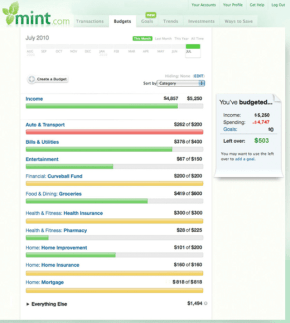
- compare my income vs. my spending habits overtime
- create spending categories and budget based on them
- create alerts for low balances or being over budget
- create both short term and long-term goals
- track debt reduction
I’ve been using Mint.com since 2008, and as my budgeting skills have grown, Mint has helped me along the way.
Two years I ago, I tried using another service, but it was too complicated for me. As I said, I’m not a financial guru. Mint is simple, easy to use and understand.
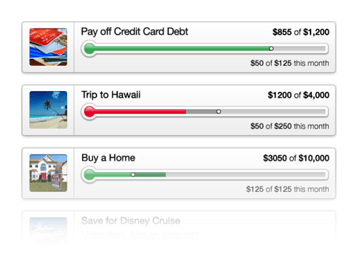
If you’re interested in a web-based money management tool, I would suggest Mint. But, you should do your research and compare Mint to other online budgeting sites to see what will work best for you.
Continue to Part III: Getting Results

 Living Her Vision
Leave a reply to Journey to Financial Freedom Series – Living Her Vision Cancel reply