
I. Changing My Perspective
One of the things that I enjoy doing is budgeting. I truly enjoy opening my laptop, pulling up my budget spreadsheet, and reviewing my finances. My husband, on the other hand, not so much.
I have always considered myself pretty financially responsible, and I’ve always been a saver by nature. I splurge here and there, but at my core, I’m a saver.
My parents never taught me how to manage money. Growing up, I saw a lot of what-not-to-do with money examples.
I do not come from a wealthy or middle-class family background. Neither of my parents have college degrees. Both worked long hours, and at times, we lived paycheck-to-paycheck.
I had accumulated $13,500 in student loan debt.
In high school, I knew my parents were not able to contribute to college. Therefore, to help with the cost, I went to an in-state school and applied for scholarships. I was fortunate enough to have received several scholarships that fully covered two and a half years of school.
When I graduated from college, I had accumulated $13,500 in student loan debt. I know that this may not seem like a lot when compared to the national average then and now, (see here and here), but it was a lot to me and scary to think that I would be paying on this debt for the next 10+ years.
When I eventually started paying my loans, I was only paying the minimum amount. And if you don’t know, paying the minimum amount on any debt (especially credit cards) is harmful because it will keep you in a cycle of carrying a balance and being charged interest. Eventually, you end up paying much more than the original loan or item was worth.
During that same year, I started my first teaching job, and I moved into an apartment that I shared with a friend.
Also during that year, I wrote down a list of things that I wanted to accomplish by my thirtieth birthday. One of those goals was to be debt-free by paying off my student loans.
Many people said that this was ambitious, but I was determined to accomplish this goal although I had no real plan.

The following year, I purchased a home through the First Time Home Buyer’s Program, and the year after that, I purchased a new car.
The home was a good decision. The car, however, not so much. Although I love my car, and 8 years later I still have it, I listened to some bad advice at the time that set me back. I went from no car payment and only a student loan debt to paying a combined total of almost $600 monthly on these loans.
Almost a year after purchasing my house and a few months after purchasing my car, I came across a resource that I credit as starting the process of changing my outlook on how I handled my finances.
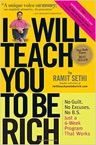
Normally, this is not the type of book I would read for fun, but iBooks was offering it as a free download, so I thought “Why not. I’m not losing any money, and at the very least, I can skim through it.”
Looking back, I am so glad I downloaded this book because it provided a good introduction to money management.
I didn’t follow every step or suggestion that Sethi outlined. There were some things that I didn’t understand or agree with. But I did grab a hold of some important concepts.
- Credit cards aren’t bad if you know how to use them
- Maintain a zero-balance monthly balance on your credit cards
- I didn’t know that. I thought the whole point of a credit card was to be able to buy things and pay it off little by little (Don’t judge me.)
- Budgeting and money management doesn’t have to be stressful or unpleasant
- Investing isn’t just for rich people
- Start contributing to a 401k or an equivalent
There are other concepts, but these are the ones that were significant to me at the time.
In Part II, I’ll discuss how I put Sethi’s principles into practice.

 Living Her Vision
Leave a reply to Journey to Financial Freedom Series – Part II: Putting in the Work – Living Her Vision Cancel reply